Digital transformation presents credit unions with an important strategic question: How can they respond to consumers who increasingly expect convenient digital experiences while maintaining the service and relationships that have traditionally distinguished the credit union model?
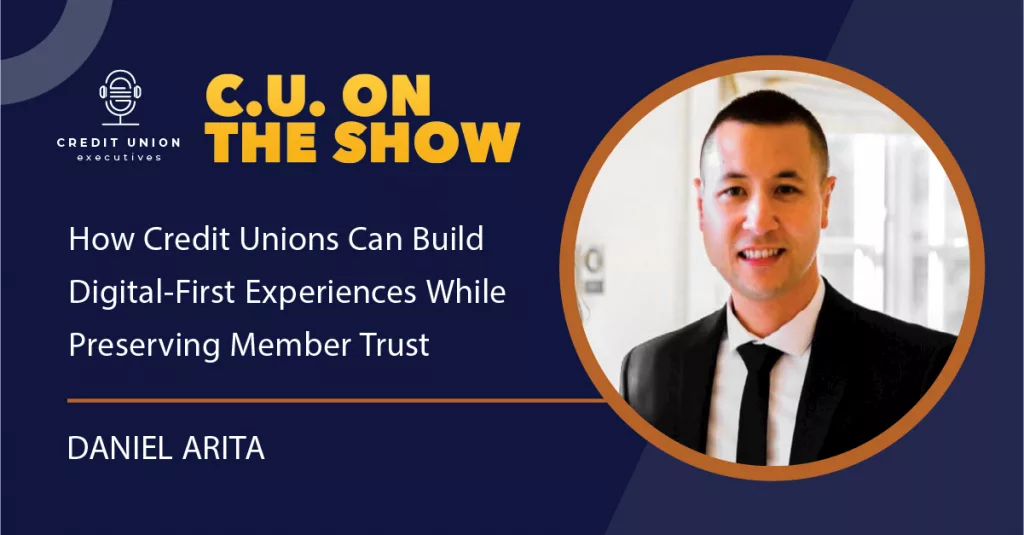
Daniel Arita, who oversees digital innovation and transformation at First Entertainment Credit Union, believes those objectives do not necessarily have to conflict.
In this episode of C.U. On The Show, Daniel joins host Doug English to discuss the development of CineFi, First Entertainment Credit Union’s digital-only brand. Their conversation examines why the organization developed a separate digital experience, how technology decisions influenced the project, and why Daniel believes human service remains important even as more financial interactions move online.
How Changing Consumer Expectations Influenced CineFi
First Entertainment Credit Union serves eligible individuals within the entertainment industry. During the conversation, Daniel explains that the industry’s workforce has become increasingly geographically dispersed beyond the credit union’s traditional Los Angeles footprint.
At the same time, he says expectations surrounding financial technology have changed.
Consumers have become accustomed to mobile products designed around convenience and ease of use. Fintech companies and other financial institutions have responded by creating increasingly digital experiences.
Daniel says First Entertainment saw an opportunity to explore how a digital-only model could help the organization serve eligible entertainment professionals beyond its traditional physical footprint.
He also says the strategy has attracted younger consumers. According to Daniel, approximately two-thirds of the people who have opened CineFi memberships over the past couple of years have been Gen Z or millennial members.
Why the Member Experience Came Before Product Expansion
Rather than beginning with a broad range of products, CineFi initially focused on checking and savings accounts.
Daniel says the team prioritized the digital experience before expanding the product offering.
As he explains during the interview, digital banking can function as more than an additional service channel. For an organization pursuing a digital-first strategy, the technology experience becomes part of how services are delivered and how members interact with the institution.
That led First Entertainment to use what Daniel describes as a test-and-learn approach.
The organization concentrated initially on developing the digital experience and evaluating how members used it. Daniel says lending is among the capabilities First Entertainment expects to consider as CineFi continues to develop.
How a Separate Technology Model Provided Additional Flexibility
One of the more significant decisions behind CineFi involved its technology infrastructure.
Instead of placing the new brand entirely on First Entertainment’s existing technology environment, the organization created what Daniel describes as a sidecar model. CineFi operates with separate core and digital banking technology as well as its own initial product offering.
Daniel says the organization selected Nymbus as a technology partner for CineFi’s core, digital banking, and onboarding capabilities.
According to Daniel, using an integrated technology environment helped the organization address some of the complexity associated with connecting multiple systems. He also says the approach gave the team additional flexibility to customize the member experience and introduce new capabilities.
The conversation also touches on developments including real-time payments, FedNow, cryptocurrency, and stablecoins. Daniel explains that CineFi does not currently offer cryptocurrency or stablecoin services, but says flexibility to evaluate future technologies was part of the organization’s technology planning.
The discussion of these technologies is informational and does not constitute a recommendation or endorsement of cryptocurrency, stablecoins, or any related product or service.
Why Digital Transformation Starts With Strategy
Building CineFi required more than selecting technology.
Daniel says First Entertainment spent approximately a year researching areas including member needs, market opportunities, the competitive environment, and possible long-term changes within financial services.
Executive leadership and board support were also important to the initiative.
For other credit unions evaluating digital strategies, Daniel encourages leadership teams to begin with the outcome they are trying to achieve.
Questions may include whether the institution’s existing operating model supports its longer-term objectives, whether it wants to reach different demographics or geographies, what resources are available internally, and whether the organization has the culture and leadership support necessary to pursue a significant technology initiative.
Daniel also notes that First Entertainment did not develop CineFi entirely internally.
The organization worked with outside partners, illustrating one potential approach for institutions that do not have every required capability in-house.
How Credit Unions Can Preserve the Human Element
Although much of the conversation focuses on technology, Daniel repeatedly returns to another theme: trust.
Credit unions have traditionally emphasized member ownership and service. In Daniel’s view, digital transformation can be most effective when it complements rather than replaces those characteristics.
CineFi therefore combines self-service technology with several ways for members to seek additional assistance.
Daniel explains that members can complete many functions within the digital experience themselves. When additional help is needed, CineFi also provides support through channels including chat, secure messaging, and telephone.
That balance is important because automation and self-service have limitations.
When an unusual or more complicated financial issue arises, some members may still prefer interacting directly with another person.
For credit unions evaluating their own digital strategies, the larger question may therefore extend beyond technology: How can the institution make financial services more convenient without losing the service experience its members value?
Stream the Episode to Learn More
Listen to the full conversation to hear Daniel and Doug discuss:
- The strategy behind CineFi: Learn why First Entertainment chose to develop a separate digital brand rather than immediately converting its entire existing operating model.
- The technology decisions involved: Hear Daniel discuss core technology, system integration, outside partnerships, real-time capabilities, and the importance of building for flexibility.
- The role of service in digital banking: Explore Daniel’s view that self-service technology and access to human support can coexist within a digital financial experience.
Digital technology continues to influence how consumers interact with financial institutions, but there is no single strategy that will be appropriate for every credit union.
Listen to this episode of C.U. On The Show to hear Daniel Arita discuss First Entertainment’s experience developing CineFi and the strategic considerations he believes other credit union leaders should evaluate when exploring digital transformation.
You spend your career putting your credit union members first—but who is helping you plan for your own financial future? ACT Advisors provides fiduciary financial planning and wealth management for credit union executives. From executive compensation and retirement planning to investment management and tax-aware strategies, our team helps you coordinate the different parts of your financial life. Visit actadvisors.com/cuexec.
Episode Links
Audio Transcription
This transcript has been lightly edited for readability, grammar, punctuation, and clarity. Filler words, transcription artifacts, false starts, and repeated words may have been removed.
Doug English: [00:00:00] Daniel Arita welcome to CU On The Show We’re delighted to have you here today and can’t wait to learn what you’re gonna teach us about fintechs, credit union technology, and making sure the credit union movement wins. So, uh, uh, welcome, thanks for being here.
Let, let’s, uh, kinda start with my favorite question, which is how did you get started working in the credit union movement? What’s, uh, what is it, uh, about for you, and then what kind of work are you doing today?
Daniel Arita: Yeah. That’s a great question. Uh, you know, my first kind of jaunt into the world of finance and banking started way back when I was in college.
I, I started my, my first job as a teller at, uh, a big bank, uh, just kind of a way to pay bills through school, and that was my first kind of exposure. I thought that was gonna be just a summer job for me, and it ended up being a, a career that lasted many, many decades here over time, so it’s been about 22 years since I’ve been in finances.
Um, [00:01:00] at some point, though, in my career, I, I moved over from the big banks, and that’s kinda when I found out about credit unions, and I think the biggest thing that I noticed in that transition was the difference in the culture and what credit unions can do for people that have, you know, the same sorts of everyday needs as anyone else.
Um, and, and in my experience working at a big bank, I, I think the biggest thing that, that stood out to me was in those situations where people fell on difficult times or in circumstances that they had trouble navigating, um, you know, I, I felt like s- in some of those circumstances, that, that system was somewhat rigged against them, or it wasn’t set up to support them in the best way that they needed help.
Uh, and so for me- transitioning from a big bank and seeing how credit unions were very different in that, in that scenario was kind of a breath of fresh air. It was like, wow, this, this organization, this not-for-profit credit union [00:02:00] organization, uh, truly does, not, not just, you know, do the things that they say they’re gonna…
not just say the things they’re gonna, they’re gonna do, but they do those things, and they help people. And when people fall on hard times, there’s, there’s folks there to help support them. And that, for me, when I looked at, you know, my morals and my values and what I believe to be the right thing to do for people and life in general, uh, resonated with me, and it made me feel like I was part of bigger, you know, something bigger that was able to help folks.
Um, and so that’s kind of how it started.
Doug English: Yeah. Well, you’ve got the perspective of, uh, a normal organization, right? Credit unions are not the norm. Credit unions are the exception. So what kind of work are you doing today, uh, and, uh, and tell me about the credit union?
Daniel Arita: Yeah. Uh, so today I oversee a team that leads our digital innovation and transformation area at First Entertainment Credit Union.
Uh, and so as part of that role, I oversee our digital banking, but also our newest kind of, uh, [00:03:00] I c- I could call it a fintech spinoff sort of within the credit union realm, uh, and that’s called Synify. It’s a digital-only credit union that was built to serve folks wherever they may be that work within our, you know, membership seg or demographic, which is the entertainment industry.
And that’s been a fantastic, really fun project to be a part of over the last two years with a really small but mighty team of, uh, five folks that have worked tirelessly, uh, to bring that to life and to enable another option, a credit union not-for-profit option for our members. Uh, and that’s, that’s been extremely fulfilling to see that, you know, from the build stage to the, to the run stage and now seeing that utilized in public with, with folks.
Um, so that’s, that’s what we’re doing.
Doug English: Hmm, i- interesting. A digital-only separate brand from the credit union. So, uh, what was the idea behind that? Like, why was that needed and, and how is it [00:04:00] differentiated from the core credit union and, and what are the differences you’re seeing in, in the membership engagement?
Tell us about
Daniel Arita: it. Yeah. I think, um, the big thing that, you know, I’ve noticed and that we noticed here at our organization over the last several years is that consumer expectations are changing, and I think you see out in the marketplace today, uh, some of these big tech-forward, fintech-type institutions that have capitalized on that, they, they’ve seen that same transition and that same shift to wanting a simple service, you know, a better experience.
It’s this disruptor sort of mentality on we have traditional banks, we have traditional credit unions, and then we have this new market entrant, right, which is these fintechs. Um, and we saw over time that, you know, that was really appealing to a lot of folks, particularly folks that are mobile, you know, savvy, that are younger potentially demographics, but really all ages, uh, because it offers a solution to [00:05:00] kind of their financial needs that’s simple, uh, and that it, it, it fits within their lifestyle and what their expectations have come to be as many other, um, you know, non-traditional companies have moved in that direction as well.
And so we, we found that that was a huge opportunity for us, one, to better engage with our existing members, but also to make sure that we can attract and retain that next generation of consumer with those expectations that have changed. Uh, but it also gives us the ability to deliver a product and a service, um, throughout, you know, throughout the country, and it’s really throughout the world, wherever they may be, uh, and take their banking and their, um, you know, their app and, and so forth with them.
Doug English: Hmm. So what, what was behind it? Like, why did the, the credit union decide to add this digital initiative?
Daniel Arita: I, I think, you know, it’s a couple things. One, we’ve noticed that within our existing footprint of, you know, physical branches and so forth, we’ve made a huge impact in the community. Uh, we’ve done [00:06:00] a lot with our seg groups, which is, you know, as I mentioned, entertainment, uh, folks.
But also that industry in and of itself is transforming itself. It’s, it’s not just in LA where we’re located anymore, but really it’s gone global, it’s gone national, it’s gone to many parts of the country. Uh, and, and for us to be able to truly serve those folks through our mission of helping, you know, people helping people, for us to have the biggest impact, I think that’s sustainable long term, it made sense for us to be able to deliver something to them that was simple, that was a value add, and that was, you know, that added, um, you know, to their overall financial picture, whatever their goals were in their life.
It’s hard to do that, I think, just having a, a, a smaller physical footprint in one geography.
Doug English: Mm-hmm.
Daniel Arita: But opening up this more worldwide, more, I’m sorry, more nationwide, um, for, for our members really serves a, a niche need that’s out there [00:07:00] that wasn’t being fulfilled today. And so that was a, that was a huge opportunity for us.
Doug English: Yeah. Yeah. I, I, obviously I’ve heard other credit unions doing, uh, a, a digital-only brand, and I think it, it makes a lot of sense. Now, are you seeing it, uh, attract a, a younger demographic? Are you seeing different uses, uh, for deposits or loan products through the, uh, um, digital-only brand, CineFi?
Daniel Arita: We are. So, you know, to your brief question, yes.
Um, you know, the average age of our existing membership, I will say, has been on kind of a, a growing upward trajectory in terms of the average age. And, and, you know, one of the things that we looked at when we were thinking about this strategy long term is, you know, w- we need to be able to attract and keep those members, but also the next generation of consumer that’s coming in.
And many of those younger generations grew up with technology. They grew up having that mobile phone right by their side throughout every, you know, every part of their day. [00:08:00] And so their expectations are, “I want that now, I want it simple, and I want it easy to use.” Uh, and so that’s what we, that’s what we decided we were gonna go out and build, and we did that.
Um, and as a result, just, you know, some of the folks that have chosen to open their memberships with us over the last couple years, about two-thirds of those are Gen Z and millennial members. Um- Yeah. I was gonna expect that … so that’s kind of turned our, it’s turned what we’ve had, you know, from a legacy model, and it’s added this additional, you know, layer for us to be able to say, “Hey, we can serve anyone that, that likes to do, you know, financial services through banking.”
We have different ways we can do that. If you, if you prefer to come into the branch, we have options for you there. But if you’d like to do that, you know, digital and mobile- Uh, we have an option that’s just as good as, as what the biggest fintechs and, and big banks out there offer today
Doug English: Yeah. Well, I, I love the idea.
So how do you… Are you able to capture, uh, their lending, uh, needs? Uh, you know, obviously there’s probably [00:09:00] no option for you to have an indirect program wherever they are, uh, so it’s up to your- the digital relationship that you’ve built. Is lending something you’ve, you’ve figured out and started to get some traction on?
Daniel Arita: Lending will be something that we offer in the future. Yeah. But, you know, what we wanted to do first of all was, uh, we positioned this, you know, internally with our teams as a test and learn. This is a big, big, uh, venture for us. You know, it’s a, it’s a significant investment. It’s something new. Uh, and what we determined that was important first and foremost is making sure we have that experience right for the user, for that member.
You know, digital is not just a channel, it’s a delivery model, it’s an operating model, and when you’re up against the big, you know, fintechs of the world, they have very slick, very streamlined- Right. They do … digital, digital, you know, services and solutions. Um, and so that was critical for us first and foremost.
We wanna get that experience right. We wanna make sure we build that because that digital experience [00:10:00] actually sways whether someone will stay with you over time if they don’t like that experience. Um, that’s really critical to the overall kind of delivery operating model here. And so we’ve taken our time to do that, you know, the way that we feel is the best for that user experience.
And so instead of first focusing on products and services, we focused on that digital experience. That has to be, that has to be- Mm … top tier. And so we started with deposit accounts, checking and high-yield savings. And the nice thing about, you know, a digital-only delivery system or model is that that delivery cost to serve these members is much lower.
We don’t have the overhead, you know, on the side of the branches, right- Yeah … and all the folks that support that. And while branches certainly, you know, serve a, a role and an important place in financial services, there are certain folks that don’t need that or don’t choose to use that. And for that, for that sort of demographic, that allows us to deliver products and services seamlessly, but also, you know, with some of the [00:11:00] best rates out in the country in terms of deposits, uh, and without fees, and with, you know, the ability to be able to return more of those profits back to the members.
So that’s what we focused on here initially. We wanna make sure that we get that experience the best it can be, get that right, and then as we start to, you know, scale those sorts of things up, we will move into lending. We’ll get that, you know, onboarded here towards the end of this year.
Doug English: Yeah. It, it makes sense.
You needed to get that user interface right, get the look and feel right so that-
Daniel Arita: Yeah …
Doug English: you don’t disrupt, I think the credit union movement, movement’s most powerful ally, which is trust, right? Yes. That’s what it’s all about, is protecting the trust that they, that members, including me and you, I think, put in the credit union movement, and that’s, that’s the difference, right?
Fintechs have got- Slick interface, but they’re, they’re here, they’re here potentially briefly, uh, recently, uh, a-and, uh, and, and maybe they don’t have as [00:12:00] much trust. How do you think about that, and how do you, um, how do you work with, uh, protecting and growing that trust?
Daniel Arita: I, I think you’re absolutely right on that avenue specifically.
I think that’s the– that’s one of the things that credit unions have been really excellent at, you know, since their existence, um, building that trust because we are a member first organization. We are a not-for-profit. We’re owned by our members, and our, our, you know, our board of directors are volunteers that have those best member interests in mind.
So for us, that, that gives us a lot of, um, leeway to make sure that we’re doing the right thing for folks. And I think, you know, being, uh, tied to an existing credit union that has a long reputation of being, um, you know, not-for-profit member first, that, that does instill trust in folks. They, they know that when they get into certain circumstances or situations, that we’re gonna be here for them.
We’re here for them to help them through some of those challenging areas. And we serve, um, through CineFi, we serve entertainment professionals, and I [00:13:00] think there’s no better example of when these folks have, you know, they have gaps in their employment as the nature of what they do for their work. They don’t always work nine to five.
They don’t always work a consistent job. They’re not always getting a paycheck. And so for us, what we know from our, you know, sixty years of history through First Entertainment Credit Union is we know that that’s the reality of how these, these people work, uh, and how they, how they live their lives. And that gives us the ability to say, “Hey, we, you know, we understand you’re gonna go through some difficult situations, but at the same time, we’re gonna be here for you.
We’re gonna work through some of these things for you.” Uh, and I think some of the bigger banks and the fintechs out there struggle with that. You know, being more of a, a profit-driven, uh, business model, that’s not always something that they can do well. And I think that the unique thing about a credit union branching out into more of this fintech world is we have the best of both worlds.
We have, you know, ideally, we have that trust that’s been built up. We have that member first mentality. [00:14:00] And now that this gap is closing between kind of the digital experience between what a credit union offers and what a fintech offers, I think we have the best of both worlds to be able to deliver something that’s gonna be, um, helpful for these folks.
Doug English: Yeah, it’s interesting to think, you know, uh, I, I don’t- I’m not familiar with your credit union, but I’m assuming it’s probably huge, right?
Daniel Arita: We’re, we’re about 2 billion in assets, about 90,000 members. So-
Doug English: Yes, that’s not, that’s not
Daniel Arita: small … yeah, kind of medium, medium size.
Doug English: Pre- pretty large. So for a larger credit union, uh, creating your own digital first brand is, uh, still a bold initiative with a, a significant capital commitment.
Um, what do the smaller folks do? What is your, uh… Like, have you thought a- about, like, where is there a crossover point based on size or membership, uh, uh, type or geographic footprint? Have, have y- have you any, uh, thoughts for our listeners on other credit unions that might be wondering [00:15:00] about creating a digital brand?
Daniel Arita: Yeah, I, I think it, you know, it, it comes down to, you know, what is, what is it, um, that you’re trying to achieve in the future? You know, is your existing business model gonna sustain you long term? And if you think that there’s opportunities to, to go deeper with, um, younger demographics or to get into different geographies, I think you have to go back and reevaluate, you know, what does, what does this company culture support, and what do we think we’re capable of?
We had to take, you know, pretty gigantic risks when we decided we’re gonna go out and build this with, you know, a significant in- investment. I won’t, I won’t, um, lie, there, there’s a significant investment involved when you go out in some of these things. But I think the key point is, do you have the cultural drive to support this?
Do you have the support from your leadership and from your executive and your board? A- and are you willing to make some calculated risks that in the short ter- term can sound expensive, [00:16:00] it can sound scary, but in the long term, these things, I think if you, if you do this well, will set your company, your, your credit union up for much more success down the road as, as folks’ expectations have changed and as, as we’re going more digital.
I think the other key thing to think about is, you know, you think about resources internally, and a lot of smaller institutions are limited in those resources, and I think it’s critical that as you explore these sorts of endeavors and these, um, these, you know, strategic, um, jumping-out points is, do you have the right partners that can help you with this?
Because I, I’m not gonna lie, we did not build this internally en- entirely on our own. We relied on the support of partners and other organizations out there that are very good at doing these sorts of things, and I think no matter your size, if you’re selecting the right partners, if you’ve got the right internal support system, you know, the right strategic objectives that are gonna help your members, um, those are the key elements that will help you be successful
Doug English: in the medium to long term.
Can we unpack that, [00:17:00] Daniel? Uh- Yeah, of course. Let’s go for it … I, I would… If it’s comfortable, like, uh, tell us, like, how did you do it? Like, who did, uh, you, you picked some partners, you, you got the strategic guidance, uh, and, uh, budget from the top. So tell us about what you, what, what you did, how you guys went through it, how long it took, uh, you know, to whatever degree you’re comfortable telling us about the capital involved and the commitments.
Tell us about it so if another credit union wants to do that, they have some idea of what reality looks like.
Daniel Arita: Sure. I, I can share a little bit about that. I mean, I think every situation’s unique to what you’re looking to do, right? So I can talk about it kind of from how we approached it.
Doug English: Sure.
Daniel Arita: But it, it, it depends on, on what’s on your list of things that you wanna get accomplished here.
Uh, for us, it was a, it was about a year process to go through much of the research that we needed to do. Um, you know, what is the market opportunity out there? What is the need from the membership? What does the competitive landscape look like? What is it going to look like in the future? How is [00:18:00] that impacting the business today, and how is that, you know, how is that setting you up long-term?
Uh, and so we went through a pretty, you know, robust process of learning about all of these things, telling that story to the executive team and to our board of directors to help them understand kind of what is the… We call it the burning platform, you know. If we’re stuck on a platform and it’s on fire, what do we do?
What’s the next step for us? I’m not saying we’re on fire, but I think when we look at how quickly technology is changing and how rapidly consumer expectations are changing, there is a bit of a platform, and I think that is existential to this entire industry that’s important that we all be discussing today.
Uh, and then when we put all that together, it was clear for us that, you know, this traditional operating model that we have today, it will serve a, a purpose, um, for, for many years to come. But I think when we think about, you know, 5, 10, 15 years out, for us to really be competitive with some of these very quick-moving fintechs out there and these neobanks [00:19:00] out there, we had to have a solution in place to be able to put up against that as well.
And so that took some time. It took some time to kind of navigate what does that, what does that mean for us, what does that mean for us in the future, and to, to really tell that story to our executive team and our board of directors, who ultimately did support that. And then I think after that point it was, well, how do we do this, right?
We, we’ve got the buy-in in terms of the strategic need, um, the external circumstances that are, that are kinda necessitating this for us, and then how do we go about creating a solution for, uh, for the long term? And that’s when we started looking at, you know, what this sidecar model of building out kind of a different entity.
So we have, in my organization, First Entertainment Credit Union, we have our traditional, you know, brick-and-mortar operating model with our digital banking services. Uh, and we thought about at first, you know, do we completely transform that existing operating model into a digital-first model? Uh, we looked at some of the pros and cons of that, uh, and I will say, you know, there’s [00:20:00] a lot of pros, but there’s also a lot of cons in doing that.
There’s a ton of, um, of- things that would just need to be transformed very quickly. And I think what’s important, what- that we learned through this process, is you’ve gotta go through this at the pace that you’re comfortable with and that your members are comfortable with. And trying to do all of that too, too quickly, I think you, you risk some alienation with your existing membership base.
Um, and so we decided, you know, it’s probably better for us at this point to, let’s start to make some inroads, let’s start to make some investments in a digital-first brand, but we decided to do that with a, with a sidecar. We call that a sidecar. So we set up a secondary brand, and that’s where CineFi came in, and we run that on a separate core system, a separate digital banking system.
Uh, and so we have two cores, and we have two digital banking systems, and we have two separate sets of products and services. And as I mentioned, with CineFi, that’s just checking and savings right now. We started small on that. We’re on our, you know, first entertainment main brand. We have the full suite of, [00:21:00] of products and services.
Uh, and the reason, some of the reasons why we did that is we just, we just thought that the transformation that needed to occur to get us digital only on the first entertainment side would have taken so many years, so much complexity, so much cost to really transform all of that, that we wanted to keep that intact for the time being, and then use this, this new sub-brand as a test to learn.
Doug English: You said a really interesting thing. Sure. Is so you did this research on transforming the, uh, the, the core, uh, first Entertainment Credit Union, decided that was gonna alienate some folks and be too dramatic a change.
Uh, and when you, when you realized to go, uh, CineFi digital first all on its own, you needed to use a different core. Um, that obv- I would think that would be a more difficult path than simply using your existing core, adding onto it in some way. Can you tell me about that decision?
Daniel Arita: Yeah, I mean, that was, that was a large part of our research and discovery [00:22:00] process as well.
You know, we, um, the existing core we have is a le- legacy core, and so within that there’s a lot of capability, but there’s also some limitations that, that, you know, we, we can’t always build the most custom instance of what we’re trying to do. It’s not real time. We have some things that we’re up against that, that create complexity.
And, you know, for, for us, when we started to get into the, the nuts and bolts of things, when you think about digital and you think about how closely interconnected that is to your core system, what we found through a lot of the research we did is we wanted those two to be one and the same.
Doug English: Mm-hmm.
Daniel Arita: We wanted that digital core to be the same as the digital banking platform because that then afforded us the opportunity to do, uh, customizations, to do things that, you know, we could build centered around, first and foremost, that member experience without having to, you know, deal with some of the limitations of two different systems trying to talk together.
Doug English: Um- I think that’s a really [00:23:00] good point, is do you think that that alignment, which I would love for you to say again for our listeners, which I think is a really critical takeaway, that alignment, uh, of the core with the, uh, the digital banking, uh, UI, right, uh, needed to be at the same place so that the, the slickness, if you will, of the interface for the digital native is a true competitor to the fintech.
Did I get that right, Daniel?
Daniel Arita: That’s right. Yeah. They’re just so closely connected that having to code, you know, all the integrations, all the capabilities, all of the things that need to be done to be able to compete effectively with a fintech was just that much more work for us to do. Mm-hmm. And so having one integrated system, first of all, I mean, there’s a lot of benefits.
It, it reduces the complexity when you have a member service component to this. You’re using the same systems to communicate, you know, with each other. Um, less cost, less overhead associated with that ’cause it’s a combined [00:24:00] system, and you get faster features to market because of those integrations that go out quickly.
Uh, and as I mentioned, that customization piece, so as we’re making changes to our core system, that, that, you know, translates into some of the changes that flow into the digital banking experience for the end user, and it just makes it that much more simple and seamless for the user.
Doug English: Very, very interesting.
Thank you. Can, uh, are you comfortable telling us which core you picked?
Daniel Arita: We, yes, we picked Nimbus. That’s, that’s publicly available. I can- Ah,
Doug English: Nimbus …
Daniel Arita: actually share
Doug English: that out there. So- Well, they, they, they are CU on the show past guests. We know Nimbus.
Daniel Arita: Oh, perfect. Yeah, yeah. They’ve been a great partner for us to work with.
You know, um, we, we came to them with, uh, I would say a pretty, um, pretty extensive wish list of things that we wanted to do. Uh, and you know, what was unique about them is they, they were willing to work with us. They were willing to say, “Hey, you know, we haven’t done this before, but let’s see if we can work on this together.”
And as a result of that, we were able to build [00:25:00] some pretty unique things that, you know, some of the legacy systems out there do not support and will not support for some time. And I can talk about some of those things, but th- those are some of the things that really solidified that decision for us and, and that’s why we went with a separate core.
Doug English: Yeah. Yeah. I, I know I was impressed with, uh, with Nimbus when we, we had that discussion. I think, think it was last year. We’ll have the notes. Uh, we’ll have a link to the Nimbus episode in the notes for, for, uh, this episode. Um, so, so, uh, getting the, the digital core, uh, up and running, uh, and that’s happened now.
And of course, in some of my recent episodes, we’ve been talking about, uh, the stablecoin launches that are happening, uh, uh, from numerous providers in the industry. And I assume that when you, uh, you selected Nimbus and this digital core, you probably did it with the expectation of, uh, having some means of, of dealing with crypto a- and, [00:26:00] and other, uh, non-traditional assets.
T- tell us about that.
Daniel Arita: Yeah, I think the, the payments frontier is really fascinating because that- that’s one of those areas that’s, um, just changed dramatically just in the last five years, and where I see it going in the future, you mentioned the stable coins, uh, there’s just– that’s gonna be revolutionary I think for, for, for folks.
If, if you’re not following that, you need to be following that. But absolutely, you know, one of, one of our requirements when we were- we were building this whole platform was we’ve gotta be able to be nimble, we’ve gotta be able to be quick, and be able to deliver that technology and product services that the consumers are demanding today.
‘Cause the market is not waiting. The consumer is not waiting. You know, they’re getting these things elsewhere from, from other institutions, and if you’re not positioned to be able to move quickly on some of these things, um, you know, you’re gonna find yourself in a difficult position down the road here.
Um, with, you know, Nimbus, they, they are, um, the core, the digital banking provider, [00:27:00] the onboarding provider for us as well, so having that all integrated is nice. But what’s also nice is they’re, you know, real-time. The core process is real-time. We can integrate when we, we think about payments and, you know, FedNow!
that’s coming and cryptocurrency and, um, stable coins. There are capabilities to support that from a core system that, you know, were, were really attractive for us when we were looking at this solution. Uh, we don’t offer it today currently, but that’s something that’s definitely on the radar, and then when we get to that point where, hey, we’re gonna implement these services, you know, we’re gonna find, again, the right partners that are gonna help facilitate that.
You gotta keep in mind some of the regulatory concerns around that, how do you manage the risk on, on some of those things. So the nice thing with, um, this setup that we’ve chosen is it integrates really well with some of these other providers out there, and that’s something that we’ve got, you know, on our roadmap for, for future.
Doug English: Yeah. Yeah. Well, it, it, uh, sounds like it’s going well, and you’ve got it built for growth. Uh, and, uh, and [00:28:00] digital is for sure where everything is, is headed, and faster than we can possibly get there. So but the, the lever i-in my opinion is trust. And, and I, I really love the way you, you built, you know, you spent time being careful about designing that, uh, user interface and experience to be, um, polished so that they…
I think the combination of the, the, the brick-and-mortar brand that, uh, resonates with the membership, uh, and then that polished, uh, user experience, that’s, that’s the interface that we need to be creating. Uh, but it’s very difficult, right? It’s expensive and it’s difficult, and fintechs, uh, raise capital, uh, sometimes from credit unions, uh, and, and, and try, and, and try to get ahead, try to take the, the wallet share.
Uh, and what, uh, CineFi is doing is, uh, is defending that and maybe turning it into a means of, of growth for, uh, for Entertainment [00:29:00] Credit Union, so.
Daniel Arita: Yeah, I, I, I mean, I think that, I think you’re absolutely right. There’s just so much change in financial services and, uh, you know, I think having some sort of fintech sort of like solution is gonna be really important if you think about your strategy long term.
But I also think it’s important that, you know, stay true to your credit union values and your roots. I think that that’s, that’s, that’s gonna be a differentiator out there in the marketplaces because fintechs have a select service. They got great apps, they have great capabilities, but it- you’re right, it boils down to that trust.
Are you gonna be able to still serve folks at that personal level of engagement that they’ve come to know and expect, um, and deliver, you know, the same products and services, but do that with a more human touch? And I think there’s ways to do that even in a digital-only environment, and we’ve demonstrated that through some of the, the, uh, the, uh, inputs and some of the content that we put on our, our, our digital [00:30:00] applications.
Some of the news- we have a newsfeed in there that kind of showcases things to folks and helps them learn and helps them grow. But then it comes down to your support, how are you supporting those members? And when they get into, you know, if they, if they do get into a challenged circumstance, are you gonna be able to, to be there to support them?
And that’s what’s gonna set you apart from a
Doug English: competition. Oh, that could be a complete differentiator, yeah. If you call and someone, uh, a- actually answers the phone, all right, I’m already in. Like, you answered the phone. Yeah. This is the greatest customer service experience to have someone answer the phone, and I can understand them, and they, uh, and, and they’re able to understand me.
That is a… It’s amazing, but that’s a wow moment, just, just getting that far. Uh, but you’re right, that’s, that’s key to the brand. You kind of expect if you’re in a fintech environment, it’s probably not gonna be the case. You’re probably gonna have a really hard time getting anyone to respond at all, and what you’re gonna get is an email or a chatbot and, and, uh, if you [00:31:00] can find a number to call, uh, it’s probably gonna be a challenging, uh, experience.
So, uh, ha- have you actually gone… May… Can you tell me about how that works? If I was a, uh, Centufi member and I was having some kind of problem, my debit card doesn’t work, what’s my experience gonna be?
Daniel Arita: Well, first of– I mean, first and foremost, we wanna enable as many self-service features as possible. So we do that within the application.
Uh, we try to put as much capability in there, so no matter, you know, what time of day, where you’re at, you have the ability to go in and, you know, turn something on, turn something off, fix something, if it’s something that you can do and you want to do that on your own. And I… and not everyone wants to do everything on their own.
But I think the expectation in some of the, you know, competition we’ve seen out there is they do enable those things. Um-
n/a: Mm-hmm …
Daniel Arita: so we’ve started first with, you know, if c- if we can do as much safe, uh, self-enablement as possible, they, they probably don’t need to contact us as much, right? Because they can, they can [00:32:00] find what they need quickly, they’re savvy, they can do it on their own.
Um, so that’s first and foremost. But in those circumstances where they do need to contact us, they do need help, you know, they have fraud on their account or, you know, this, that or the other, we have, um, a multitude of ways they can contact us, both through chat, secure message, and telephone. They can call us, and we do have live people that answer the phone, and we’ll talk with them.
And so that is… I think that’s important because, um, you need to be able to meet people where they’re at. As you go more digital, these are, these are choices folks are making. They’re, they’re making a choice to go digital for a reason, but digital has limitations as well, and I think you can only do so much through automation, and you can only do so much through self-serve.
You gotta have the, the back-end support to, to, to, to be there for folks because that’s, that is the credit union, I think, mission, and those are some of the values that are so important as we move forward in this transformational effort.
Doug English: Digital is wonderful until something goes wrong. [00:33:00] Yeah. And then you want a human voice on the other end of the phone that hears you, validates, uh, the situation that you’re in, and looks for a solution as your advocate, right?
I think that’s- 100% … that’s the differentiator. That is the, the differentiator that I think, uh, protects the, the relationship with the member, and the, and the fintechs, I, I don’t believe are going to be doing that.
Daniel Arita: Yeah. I’ve had, you know, just anecdotally, I’ve had personal experiences with some of the biggest fintechs out there where something did go bad.
Doug English: Mm.
Daniel Arita: And, you know, the service that I received was not the best. And so, you know, when we set forth to build this, you know, we wanted to make sure that we did this in… that was still, you know, true to our people helping people mantra. Uh, and that’s… You’ll see that evident, I think, if you were to go, um, look at what we built in our solution.
That’s, that’s core and that’s critical to our mission of serving people. And again, this goes back to how credit unions and banks, and I would, I [00:34:00] would argue fintechs, have different, you know, uh, sometimes different priorities. When we take that profit motive out completely, it allows us to be able to deliver more in terms of service and quality to our, to our members.
Doug English: Well, uh, Daniel, I’ve really enjoyed our conversation today. If our listeners want to learn more about, uh, CineFi, uh, to, to, to sort of see what’s right for their credit union, um, what would you suggest they, uh, do to, uh, to learn more?
Daniel Arita: Yeah. Well, first and foremost, you’re, you know, welcome to check out our, our website, which is CineFi.com o- on, on the web.
Um, uh, I think that’s important to start to look and see what else is out there, what other credit unions have been doing. We’re one of several other examples. We’re not the only one that’s done this. Research what’s out there. You know, get in touch with your network o- of, uh, professional colleagues. Um, and then, and then also, you know, go to some of these big events that are out there where there’s big industry conferences and events that showcase a [00:35:00] lot of the capabilities, and these are changing quickly throughout, you know, the year, even the week even.
Uh, I think it’s important to stay in touch with what’s happening, get a pulse on what’s happening within the industry, and I would say listen to shows and podcasts like this because you’re gonna get a lot of information about what others are doing out there. Uh, and I think that’s important to stay connected.
Doug English: Awesome. Awesome, Daniel. Well, thank you for, uh, your leadership in the credit union movement and for, uh, joining me on CU On The Show today. I greatly appreciate, uh, the bold leadership ideas that you have pr- pre- presented and shared with our listeners. Uh, and, uh, we will look forward to, uh, when you g- get a little further down the path and you got some more ideas to share with the credit union movement, we’ll have you back.
Daniel Arita: Thanks, Doug, appreciate you having me on the show
This content is for educational and informational purposes only and is based on a discussion with third-party participants. It should not be construed as investment, legal, cybersecurity, privacy, compliance, data-governance, or operational advice. Credit unions and other organizations should evaluate digital banking platforms, payment technologies, data practices, third-party technology providers, and related services against their own policies, regulatory obligations, information-security requirements, vendor due-diligence standards, and legal counsel guidance. ACT Advisors does not guarantee any specific operational, governance, member-service, or financial outcomes. Results will vary based on each institution’s systems, processes, controls, policies, data quality, and implementation. The guests featured in this discussion are not clients of ACT Advisors and were not compensated for their participation. Any views expressed are their own and do not constitute a recommendation or endorsement of ACT Advisors or its services. References to third-party organizations, platforms, or resources are for identification and discussion purposes only and do not imply endorsement, sponsorship, affiliation, or approval by those third parties.