
2026 Mid-Year Outlook: What We’re Watching—and What Still Drives the Plan
Market forecasts can be interesting. They can also become a distraction when every new headline is treated as a reason to change course. In our
A family with substantial wealth rarely has one financial decision at a time. A business transition, tax bill, gift to children, charitable commitment, concentrated holding, or retirement change can each alter what the family should do next. The hard part is figuring out which decision needs to come first, because that choice can shape the rest.
ACT Advisors works with high-net-worth families to connect those decisions. We begin with the issue that has real consequences now, then examine how it affects cash flow, investments, taxes, estate planning, philanthropy, and other family priorities.
Investment management, tax preparation, legal documents, and business or property decisions are often handled in separate meetings. Each answer may be sound within its discipline, while the family still has to understand how the answers interact.
Selling a business interest can change taxable income, the investment plan, charitable capacity, estate considerations, and the amount of liquidity the family needs. Holding a meaningful position in one company can affect portfolio risk and future gifting choices. A change in caregiving, spending, or real estate can alter cash needs before any portfolio change is made.
Our first task is to identify which decision needs to be made first and what it changes. That creates an order for the work: what needs attention now, what requires coordination with a CPA, attorney, or other professional, and what can wait.
From business sales to inheritance and other major transitions, families with significant wealth face unique financial challenges. These examples show how ACT Advisors delivers integrated strategies to reduce taxes and simplify complexity.
When Mark and Linda sold an investment property, they faced a large capital gains tax bill. By establishing a direct indexing portfolio in advance, we harvested losses and applied them strategically to offset the gain—saving a significant amount in taxes. After the sale, we redeployed the proceeds into a diversified, tax-efficient investment portfolio that continues to use tax-loss harvesting to minimize ongoing taxes while aligning with their retirement and legacy goals.
After years of saving, John and Mary approached retirement with multiple accounts, trusts, and charitable priorities—but no clear strategy for drawing income tax-efficiently. We built a coordinated withdrawal plan, structured their portfolio for long-term income, and integrated charitable giving into their overall tax strategy. Today, their finances support not only their retirement lifestyle but also the family legacy they want to leave behind.
The above examples are hypothetical illustrations based on real client situations. They are for informational purposes only, do not represent actual or guaranteed outcomes, and may not be representative of all clients. Past performance does not predict future results.
You’ve built wealth through hard work and pivotal decisions. We help you bring that same clarity and confidence to your financial life—without sales pressure, only fiduciary guidance.
Read more of our reviews here. We encourage feedback—but never compensate or edit what’s shared. The above statement is a testimonial from a current client of ACT Advisors. No compensation was provided for this statement. Individual results may vary and are not guaranteed.
ACT Advisors frequently shares short updates with clients on market trends, portfolio changes, and planning opportunities. It’s one way we keep families with significant wealth informed, proactive, and confident in their strategies.
Market forecasts can be interesting. They can also become a distraction when every new headline is treated as a reason to change course. In our
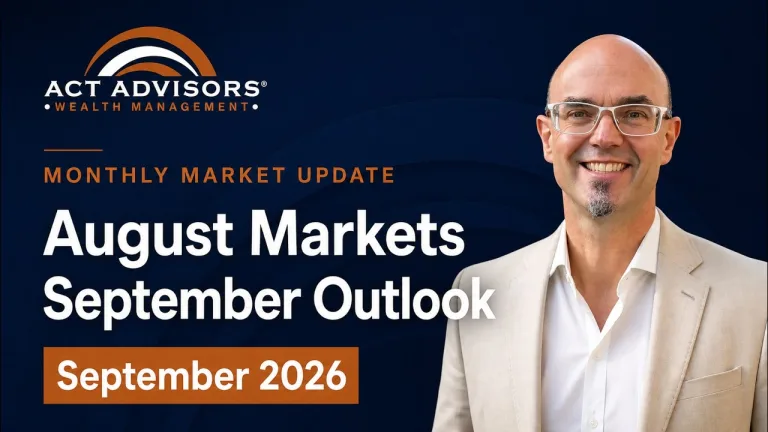
Doug English reviews August market gains and three planning questions to revisit if markets pull back in September.

July brought broad declines across stocks and bonds. Doug English, CFP®, shares ACT Advisors’ qualified outlook, a QQQ Technology Index update, and a secure tax-return
High-net-worth families come to us with similar concerns—how to minimize taxes, simplify complexity, and protect their wealth. Here are our answers to the most common questions.
Direct indexing creates a portfolio that mirrors an index but holds the individual stocks directly. This structure lets us sell specific securities at a loss, even in an overall up market. Those harvested losses can be used to offset gains from taxable investment accounts, real estate, or business sales—and any unused losses carry forward to future years. The result is a customized portfolio with ongoing opportunities for tax savings.
The answer depends on your mix of taxable, tax-deferred, and trust accounts. We create coordinated withdrawal strategies that minimize taxes while sustaining retirement income, often blending Roth conversions, charitable giving, and direct indexing.
Yes. Pre-sale planning can significantly reduce the tax burden of a liquidity event. We often combine direct indexing, charitable strategies, and deal structuring to help families preserve more of their proceeds.
As fiduciaries, we’re legally obligated to act in your best interest. Being fee-only means no commissions, no product sales—just objective advice designed to help protect and grow your wealth.
High-net-worth families need more than investment management. We integrate tax strategy, portfolio design, estate planning, and legacy goals into one plan—working closely with your CPA and attorney to ensure every piece fits together.